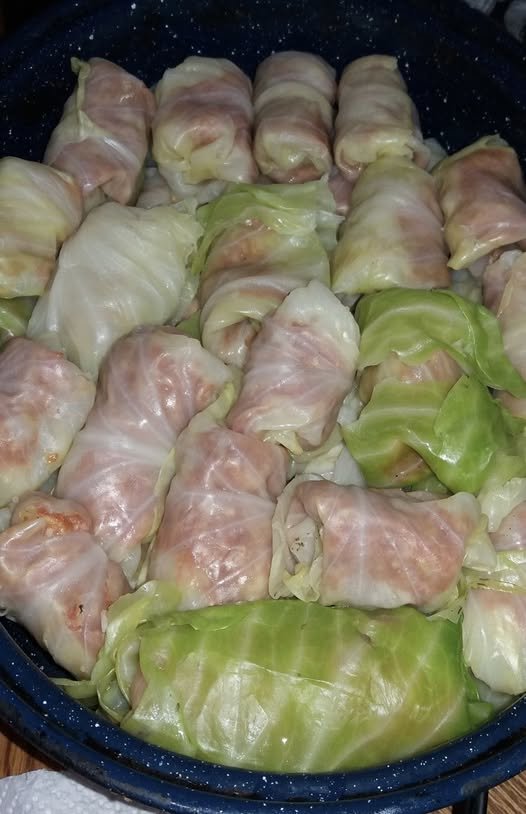
🇭🇺 Hungarian Stuffed Cabbage Rolls – Töltött Káposzta
Few Hungarian dishes feel as comforting and traditional as Töltött Káposzta—tender cabbage leaves wrapped around a savory filling of seasoned meat and rice, then slowly cooked until everything is rich, tender, and full of paprika flavor.
In Hungary, stuffed cabbage is strongly associated with family gatherings, celebrations, and holiday meals. It is also traditionally served at some Hungarian weddings, including as a late-night dish. Taste Hungary
A quick note: despite the “5 minutes” wording sometimes used in social-media posts, traditional stuffed cabbage is not a 5-minute recipe. The preparation is straightforward, but the rolls need time to cook slowly and become tender.
🥬 Ingredients
For the cabbage rolls
1 large head of green or white cabbage
700 g (1½ lb) ground pork
100 g (½ cup) uncooked rice
1 medium onion, finely chopped
2 cloves garlic, minced
1½ tbsp sweet Hungarian paprika
1 tsp salt
½ tsp black pepper
1 tsp dried marjoram
1 egg, optional
1–2 tbsp lard or vegetable oil
For the pot
500–700 g sauerkraut, drained
300–400 g chopped sauerkraut, optional
2–3 tbsp tomato paste or crushed tomatoes
2 bay leaves
500–750 ml (2–3 cups) chicken or pork stock
1 tsp paprika
Salt and pepper, to taste
For serving
Sour cream
Fresh parsley
Crusty bread
👩🍳 How to Make Töltött Káposzta
1. Prepare the cabbage
Bring a large pot of salted water to a boil.
Carefully remove the outer leaves from the cabbage as they soften. Continue until you have enough large, flexible leaves for your rolls.
Trim the thick central vein of each leaf slightly so that it is easier to roll.
2. Prepare the filling
Heat the lard or oil in a skillet and gently cook the chopped onion until soft.
Add the garlic and cook briefly.
Remove from the heat and allow it to cool slightly.
In a large bowl, combine:
Ground pork
Rice
Onion and garlic
Hungarian paprika
Salt
Black pepper
Marjoram
Egg, if using
Mix just until everything is evenly combined.
3. Fill the cabbage leaves
Place a cabbage leaf flat on your work surface.
Put a portion of the meat mixture near the bottom of the leaf.
Fold the sides toward the center and roll firmly into a neat parcel.
Repeat until all the filling is used.
4. Build the pot
Spread some sauerkraut across the bottom of a large heavy pot.
Arrange the cabbage rolls tightly on top.
Add more sauerkraut between and over the rolls.
Add the bay leaves and tomato.
Pour in enough stock to come approximately halfway to two-thirds up the rolls.
5. Cook slowly
Bring the pot gently to a simmer.
Cover and cook over low heat for about 1½–2 hours, or until the cabbage is tender and the meat and rice are fully cooked.
Avoid vigorous boiling, which can cause the rolls to break apart.
6. Rest before serving
Turn off the heat and allow the stuffed cabbage to rest for about 15–20 minutes.
This helps the rolls firm up and allows the flavors to settle.
🥛 The Classic Way to Serve It
Spoon some of the sauerkraut and cooking juices onto each plate, then add one or two cabbage rolls.
Top generously with sour cream and serve with fresh bread.
The combination of tangy sauerkraut, rich pork, paprika, tender cabbage, and cool sour cream is what makes this dish so satisfying.
Taste Hungary describes the classic preparation as cabbage leaves filled with ground pork and rice, seasoned with spices and cooked in a savory broth, with sour cream and bread as traditional accompaniments. Taste Hungary
🇭🇺 Why Is It Called Töltött Káposzta?
The Hungarian name literally refers to stuffed cabbage. Hungarian culinary references list töltött káposzta as stuffed cabbage cooked with sauerkraut. Taste Hungary
Like many Central and Eastern European stuffed-cabbage dishes, there are numerous regional and family variations. Some cooks use pork alone, while others combine pork and beef; seasoning and the amount of sauerkraut can also vary.
❤️ Helpful Tips
Use good-quality paprika. Sweet Hungarian paprika gives the filling its characteristic color and flavor.
Don’t overfill the leaves. The rice expands as it cooks, so leave a little room inside each roll.
Cook gently. A slow simmer keeps the cabbage leaves intact and produces tender rolls.
It can taste even better the next day. After resting overnight, the flavors have more time to come together.
Don’t forget the sour cream. It’s one of the classic accompaniments and adds a creamy contrast to the tangy sauerkraut.
❓ Frequently Asked Questions
Can I use ground beef instead of pork?
Yes. You can use beef alone or combine beef and pork. Pork is especially common in traditional Hungarian versions.
Can I use cooked rice?
Yes, but reduce the cooking time and avoid overfilling the rolls. Uncooked rice is commonly mixed directly into the filling because it cooks inside the cabbage.
Can I freeze stuffed cabbage?
Yes. Allow it to cool completely, portion it into airtight containers, and freeze. Thaw safely before reheating.
What should I serve with stuffed cabbage?
Sour cream and crusty bread are classic choices. Pickles or other Hungarian-style preserved vegetables also work well.
🍽️ Final Thoughts
Töltött Káposzta is the kind of dish that belongs in the middle of a family table—a big pot, plenty of sour cream, warm bread, and everyone helping themselves.
It’s hearty, comforting, and deeply connected with Hungarian home cooking and celebrations. 🇭🇺❤️ Taste Hungary
Would you make these Hungarian Stuffed Cabbage Rolls with pork only, or a pork-and-beef mixture?
💬 Dear Silent 🤫 members, if you love Hungarian food, say “HI” in the comments so I know you’re here! 🇭🇺❤️