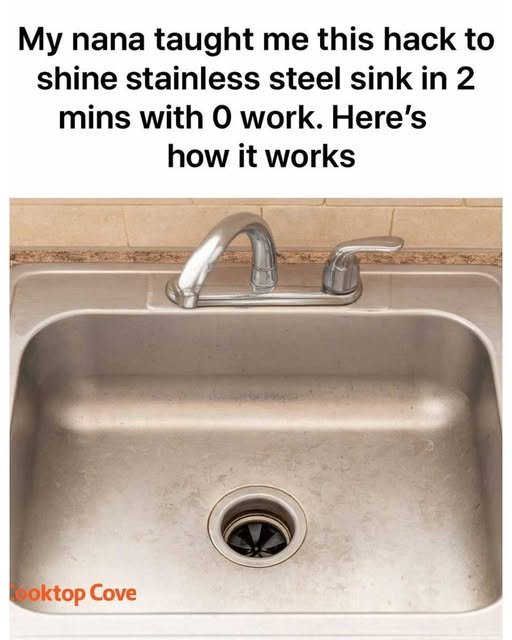
✨ My Nana’s 2-Minute Trick for a Shiny Stainless Steel Sink
There’s something so satisfying about seeing a stainless steel sink go from dull and cloudy to clean, bright, and polished. And you don’t need an expensive specialty cleaner to give it a fresh look.
This simple routine uses a few basic household ingredients and takes only a couple of minutes. While the “zero work” part of the viral claim is a little exaggerated, the actual method is quick and easy. 🧽✨
🛒 What You’ll Need
Dish soap
Baking soda
White vinegar
A soft sponge or microfiber cloth
Warm water
A dry microfiber towel
Optional: A few drops of cooking oil or mineral oil for a final shine.
🧽 Step 1: Give the Sink a Quick Rinse
Remove dishes, food scraps, and anything sitting inside the sink.
Rinse the entire surface with warm water.
This loosens food residue and makes the cleaning step much easier.
🫧 Step 2: Add a Little Dish Soap
Put a small amount of dish soap onto a damp sponge.
Gently wipe the basin, sides, and around the drain.
Pay particular attention to areas where grease and food residue tend to accumulate.
You don’t need to scrub aggressively.
✨ Step 3: Use Baking Soda for Dull Spots
Sprinkle a light layer of baking soda over the damp surface.
Using a soft sponge or microfiber cloth, gently rub the sink in the direction of the stainless-steel grain.
This can help lift grime and water marks without requiring a harsh abrasive cleaner.
Important:
Don’t use steel wool or an aggressive scouring pad on stainless steel. Scratches can make the surface look dull permanently.
🍶 Step 4: Rinse — Then Use Vinegar Carefully
Rinse away the baking soda thoroughly.
If mineral deposits or water spots remain, you can apply a small amount of white vinegar diluted with water to the affected areas.
Let it sit briefly, then rinse thoroughly.
Vinegar’s acidity can help dissolve mineral deposits such as limescale.
Never mix vinegar with bleach or chlorine-containing cleaners. Dangerous fumes can be produced.
✨ Step 5: The Secret to That “Shiny” Look
Here’s the step many people skip:
Dry the sink completely.
Use a clean microfiber towel and wipe away every drop of water.
Water spots are one of the biggest reasons a stainless-steel sink can look cloudy even after it’s been cleaned.
For an extra-polished appearance, you can put one or two drops of mineral oil on a clean microfiber cloth and lightly wipe the stainless steel in the direction of the grain.
Don’t use too much oil—you want a thin polish, not a greasy coating.
🚿 Don’t Forget the Faucet and Drain
Once the basin is clean, quickly wipe around:
The faucet base
Faucet handles
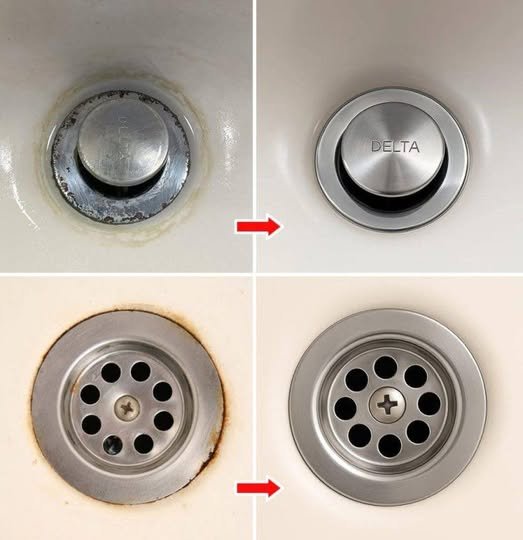
Drain rim
Countertop edges
Areas behind the faucet
These spots often collect water deposits and make an otherwise clean sink look dirty.
💡 Why This Works
The trick isn’t really one magical ingredient.
It’s the combination of:
Dish soap → removes grease Baking soda → helps lift stubborn residue Vinegar → helps with mineral deposits Microfiber towel → removes remaining water spots Light polishing → improves the shine
And perhaps the most important part is simply drying the sink afterward.
⚠️ A Few Stainless-Steel Mistakes to Avoid
❌ Don’t use steel wool.
❌ Don’t scrub aggressively against the grain.
❌ Don’t leave vinegar sitting on the surface for a long time.
❌ Don’t mix vinegar with bleach.
❌ Don’t use several different cleaning chemicals together.
❌ Don’t assume every sink has the same finish—some stainless-steel surfaces have special coatings that require different care.
🧼 How Often Should You Do This?
For a kitchen sink that’s used every day, a quick rinse and wipe after use can prevent buildup.
A more thorough cleaning once or twice a week can help keep the surface looking fresh.
And if you have hard water, drying the sink after use can make an especially noticeable difference.
✨ Bottom Line
You don’t need an expensive cleaner or a complicated routine to make a stainless-steel sink look much better.
A little dish soap, baking soda, diluted vinegar when appropriate, gentle wiping, and thorough drying can go a long way.
The “2 minutes with zero work” part may be social-media exaggeration—but the basic idea is genuinely simple. 🧽✨
Does your kitchen sink get covered in water spots too, or is yours usually easy to keep shiny? 👇