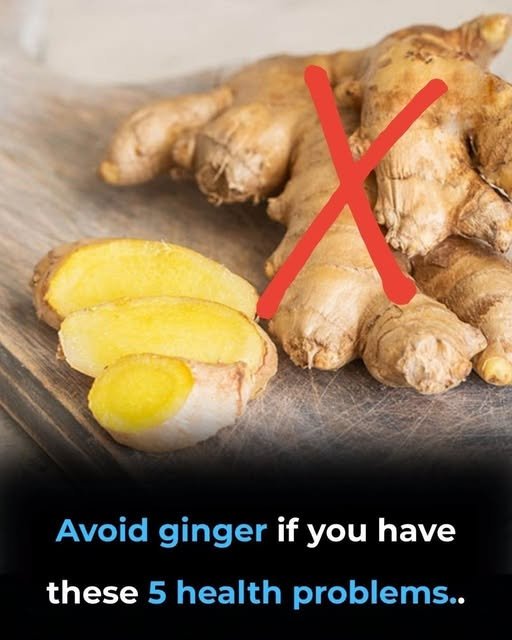
🫚 Doctors Warn: Should You Avoid Ginger If You Have These 5 Health Problems?
Ginger is often promoted online as a natural remedy for everything from inflammation to digestion. But the viral claim that “ginger is dangerous if you have these five conditions” needs some context.
Ginger is generally well tolerated when consumed as a food, but large amounts, concentrated supplements, and ginger extracts can interact with certain conditions and medications.NCCIH
1. 🩸 You take blood thinners
This is one of the most important precautions.
Ginger may affect platelet function, so concentrated ginger supplements could potentially increase bleeding risk, particularly when combined with medicines such as warfarin or other anticoagulants and antiplatelet drugs. Evidence about the size of this interaction is not completely conclusive, so people taking these medicines should discuss ginger supplements with their healthcare professional. Memorial Sloan Kettering Cancer Center
Important: using a small amount of ginger in normal cooking is different from taking concentrated ginger capsules or extracts.
2. 🩺 You have gallstones
Ginger may increase bile flow. Because of this, concentrated ginger supplements are generally cautioned against in people with gallstones. Memorial Sloan Kettering Cancer Center
If you have known gallstones and want to take ginger medicinally or in supplement form, speak with your doctor first.
3. 💉 You take diabetes medication
Some research suggests ginger can lower blood glucose. Taking concentrated ginger alongside insulin or glucose-lowering medication could potentially contribute to blood sugar becoming too low. The clinical importance of this interaction isn’t fully established, but caution is appropriate. Memorial Sloan Kettering Cancer Center
That doesn’t mean people with diabetes must avoid ginger completely. A little ginger used in food is very different from taking a high-dose supplement.
4. 🏥 You’re preparing for surgery
Because of its possible effects on blood clotting, concentrated ginger supplements are commonly advised against around the time of surgery. Tell your surgical team about all supplements and herbal products you’re taking rather than deciding on your own when to stop them. Memorial Sloan Kettering Cancer Center
5. 🔥 Ginger gives you digestive symptoms
More ginger isn’t necessarily better.
Oral ginger can cause heartburn, abdominal discomfort, diarrhea, or irritation of the mouth and throat, particularly at higher doses. NCCIH
If ginger consistently makes your reflux or stomach symptoms worse, there’s no reason to force yourself to consume it.
🫚 What Are the Benefits of Ginger?
Ginger isn’t simply a dangerous food.
Research suggests that ginger supplements may help with some types of nausea and may modestly improve symptoms of menstrual cramps. There is also some evidence for knee osteoarthritis, although NCCIH notes that much of that research is of limited quality. NCCIH
So the more accurate message isn’t “ginger is bad.”
It’s:
Ginger can be useful for some people, but concentrated amounts aren’t appropriate for everyone.
🌿 Food vs. Supplement Matters
This distinction is often missing from viral health posts.
Adding a small amount of fresh ginger to:
tea
soups
stir-fries
sauces
smoothies
meals
is generally very different from taking high-dose capsules, extracts or concentrated ginger drinks.
The stronger the preparation, the more important medication interactions and individual health conditions become. Memorial Sloan Kettering Cancer Center
🚨 Who Should Check With a Doctor or Pharmacist First?
Talk with a healthcare professional before using ginger supplements if you:
Take blood-thinning medication
Take diabetes medication
Have a bleeding disorder
Have gallstones
Are scheduled for surgery
Take several prescription medications
Have experienced unusual bleeding or significant stomach symptoms after taking ginger
And don’t stop a prescribed medication simply because a social-media post warns about an interaction.
🫚 Bottom Line
Ginger is not inherently dangerous, and there is no good evidence that everyone with five particular health problems must completely avoid it.
The real concern is mainly high-dose ginger supplements and potential interactions, particularly with blood thinners, diabetes medicines, gallstones and surgery. Memorial Sloan Kettering Cancer Center
For most people, ginger used as a normal culinary ingredient is very different from taking a concentrated herbal supplement.
Do you use fresh ginger every day—in tea, food, or as a supplement? 🫚👇