The Boy Who Stole Bread — And the Judge Who Reminded Everyone What Justice Should Mean
The courtroom was unusually quiet that morning.
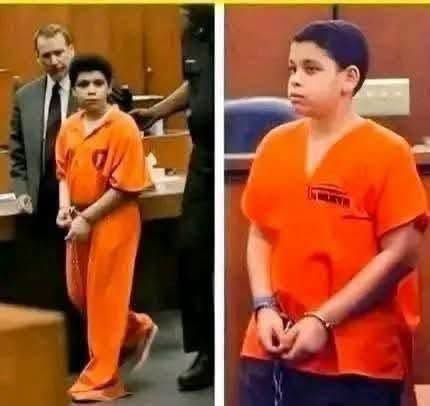
A 15-year-old boy stood before the judge, wearing an oversized orange shirt and a pair of worn-out shoes. His hands were cuffed, and his eyes remained fixed on the floor.
He had been caught stealing a small bundle of bread and a little cheese from a neighborhood grocery store. During the struggle with the security guard, a shelf had fallen and several items had broken.
The store owner wanted the boy punished.
The judge looked at the young defendant and asked gently:
“Did you take the food?”
“Yes, sir,” the boy whispered.
“Why did you steal it?”
“Because I needed it.”
“Didn’t you have money to pay?”
“No, sir.”
“Where is your family?”
The boy hesitated before answering.
“I live with my mother. She’s sick and hasn’t been able to work.”
“Why didn’t you ask someone for help?”
“I did. I asked people all morning, but nobody helped me.”
The judge leaned forward.
“And what do you do for a living?”
“I wash cars, sir. I usually earn a little money that way. But today I stayed home to look after my mother.”
For a moment, nobody spoke.
The judge looked at the boy, then at the store owner, and finally at the people sitting in the courtroom.
He had heard many cases during his career, but something about this one troubled him.
The boy had broken the law. That much was clear. But the circumstances behind his actions raised a much bigger question.
What kind of community allows a child to reach the point where stealing bread feels like his only option?
The judge finally spoke.
“Stealing is wrong, and breaking the law has consequences. But before we decide what this boy deserves, we must also ask ourselves what we have failed to do.”
He paused.
“A hungry child standing in front of us is not simply a criminal case. It is also a reminder that someone may have needed help long before the police were called.”
Then he announced his decision.
He ordered the boy to take responsibility for the damage, but he also directed that his circumstances be considered before any punishment was imposed.
The judge then took money from his own wallet and placed it on the table.
“This is my contribution toward helping this family,” he said.
He invited everyone in the courtroom to contribute voluntarily if they wished. Some people reached for their wallets. Others quietly placed money on the table.
The store owner, who had remained silent, finally stood up.
“Your Honor,” he said, “I was angry because my store was damaged. But I didn’t know the boy’s mother was sick. I would like to help too.”
The judge nodded.
“Then perhaps today we can do more than punish someone. Perhaps we can prevent this from happening again.”
After the hearing, arrangements were made to connect the family with local social services, food assistance, and medical support. The boy was also offered help finding a safe way to continue earning money while staying in school.
As the boy prepared to leave, he turned toward the judge.
“Sir, am I still a bad person?”
The judge looked directly at him.
“One mistake does not define your entire life. What matters now is what you learn from it and what you choose to do next.”
The boy’s eyes filled with tears.
For the first time that day, he lifted his head.
Outside the courtroom, people were still talking about what had happened. Some remembered the money collected. Others remembered the store owner’s change of heart.
But the judge’s final words stayed with everyone:
“Justice must protect the law, but it must never forget the human beings standing before it.”
And perhaps that was the most important lesson of the day.
The boy needed to understand that stealing was not the answer. But the adults around him needed to understand something too: compassion, food, and support should never arrive only after a child has been arrested.
Sometimes, the greatest act of justice is not simply deciding how someone should be punished.
It is making sure that the same tragedy does not happen again.
Note: This is a fictionalized inspirational story. The courtroom events and dialogue are presented for storytelling purposes, not as a verified real-life case.