The Most Powerful Fruit: What Happens When You Eat Dates in the Evening?
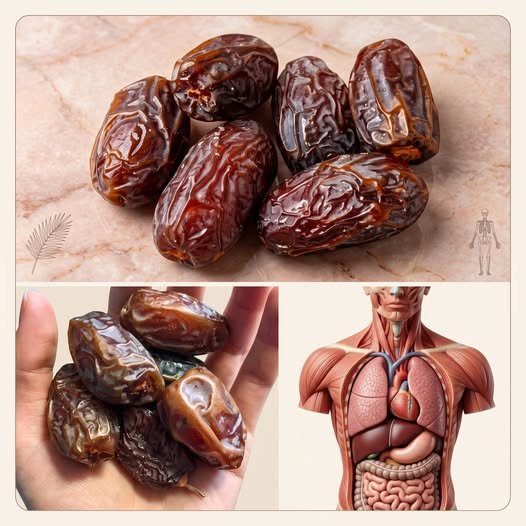
The fruit shown in the image is dates—sweet, naturally chewy fruits that have been enjoyed for centuries.
Online posts sometimes describe dates as a “miracle fruit” and claim that eating them at night can cleanse the body, repair organs, or dramatically transform your health overnight. The reality is more interesting: dates are genuinely nutritious, but there is no scientific evidence that eating them once in the evening produces a dramatic overnight transformation.
Why Are Dates Considered Nutritious?
Dates provide carbohydrates for energy along with dietary fiber and minerals. USDA data also identify dates as a source of antioxidants, particularly phenolic compounds, although the amounts vary depending on the variety. (ARS)
They also contribute potassium and fiber to the diet. USDA nutrition guidance notes that fruit can be an important source of both nutrients, while fiber supports normal bowel function. (MyPlate)
What Happens If You Eat Dates at Night?
There is nothing uniquely medicinal about eating dates specifically before bed. Your body still digests and absorbs their nutrients whether you eat them in the morning, afternoon, or evening.
However, dates can make a convenient evening snack because they are naturally sweet and contain fiber.
A small serving can also be paired with another nutritious food, such as:
Plain Greek yogurt
A handful of nuts
Oatmeal
Nut butter
Fresh fruit
Combining foods can make a snack more filling and nutritionally balanced.
Can Dates “Cleanse” Your Body?
Not in the way viral posts often claim.
Your body already has sophisticated systems involving the liver, kidneys, digestive tract and lungs that process and eliminate waste. Eating dates does not “flush toxins” from your organs or magically cleanse your blood.
What dates can do is contribute useful nutrients as part of an overall balanced diet.
What About Digestion?
This is one area where dates can genuinely be useful.
Dates contain dietary fiber, and fiber is important for normal bowel function. Increasing fiber gradually while drinking enough fluids can help support digestive health. (aglab.ars.usda.gov)
But eating a very large quantity of dates at once isn’t necessarily better. Because they are naturally sweet and relatively concentrated, moderation makes sense—particularly for people who need to monitor their carbohydrate or sugar intake.
How Many Dates Should You Eat?
There is no universal number that everyone should eat at night.
A small serving can fit comfortably into a balanced diet. Your appropriate portion depends on your overall calorie needs, diet and health conditions.
If you have diabetes or need to carefully manage blood glucose, remember that dates contain substantial natural sugars and carbohydrates. Consider your total carbohydrate intake rather than treating dates as a sugar-free health food.
The Real Secret
Dates don’t need exaggerated health claims to be worth eating.
They are naturally sweet, contain fiber and provide several nutrients and plant compounds. USDA research has also found that the antioxidant content of dates varies among different varieties. (ARS)
So if you enjoy a few dates in the evening, they can absolutely be part of a healthy eating pattern—but they are not a miracle cure, and there is no evidence that eating them once at night will suddenly “restore” your organs or transform your health.
Final Thought
Instead of searching for one “most powerful” fruit, focus on variety. A diet rich in fruits and vegetables, whole grains, legumes, nuts and other nutrient-dense foods is associated with better overall health than relying on a single food. (NESR)
Dates are a delicious part of that picture—just not a magic one.