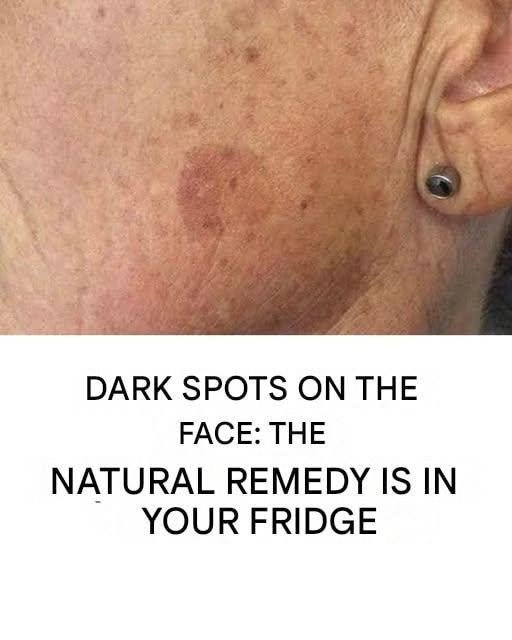
🌿 Dark Spots on the Face: Can a Kitchen Ingredient Really Make Them Disappear?
A viral post claims that you can “add it to your cream” and make facial blemishes and dark spots a thing of the past.
The idea sounds simple, but there is an important problem: the image does not identify the ingredient, and there is no single ingredient from your refrigerator that can reliably erase every type of facial dark spot.
Dark patches can have many causes—including sun exposure, melasma, acne or inflammation, hormonal changes, medications, and skin irritation—so treatment depends on what’s actually causing the pigmentation. Académie Américaine de Dermatologie
☀️ Why do dark spots appear?
When the skin produces excess melanin, darker areas can develop. This is called hyperpigmentation.
One of the most important steps is surprisingly simple:
Daily sunscreen
Dermatologists recommend a broad-spectrum SPF 30 or higher to help prevent existing dark spots from becoming darker and reduce the development of new pigmentation. For melasma and darker skin tones, a tinted sunscreen containing iron oxides can provide additional protection against visible light. Académie Américaine de Dermatologie
Without sun protection, even an otherwise effective dark-spot treatment can have disappointing results.
🌟 Evidence-based ingredients
Depending on the cause and your skin type, dermatologists may recommend products containing ingredients such as:
Retinoids can be useful for mild pigmentation, but they can also irritate the skin. Irritation itself can trigger more pigmentation, particularly in darker skin tones, so starting gently is important. Retinoids should also be avoided during pregnancy unless specifically directed by a clinician. Académie Américaine de Dermatologie
🚫 Be careful with homemade mixtures
Mixing an unknown food ingredient into your regular face cream isn’t automatically safe.
Something that is safe to eat isn’t necessarily safe or effective when applied to the skin. Lemon juice, baking soda, vinegar and other popular DIY remedies can irritate the skin and potentially make pigmentation worse.
The American Academy of Dermatology recommends using gentle skincare products and stopping products that burn or sting. Académie Américaine de Dermatologie
👩⚕️ What if the dark spot doesn’t look typical?
Not every dark patch is simply an age spot or melasma.
If a spot is new, rapidly changing, very dark, irregular, bleeding, painful, or different from your other spots, it’s worth having a dermatologist examine it rather than trying to bleach it at home.
A dermatologist can determine whether you’re dealing with melasma, post-inflammatory hyperpigmentation, an age spot, or another skin condition. Académie Américaine de Dermatologie
✨ Bottom Line
The viral promise that one ingredient added to your cream will make facial blemishes disappear is too good to be taken literally.
For most dark spots, the better-supported approach is:
Identify the cause → protect your skin from the sun → use an appropriate proven ingredient → give it time.
And if the pigmentation is persistent or unusual, getting the correct diagnosis is much safer than experimenting with kitchen remedies.
Have you ever tried a homemade remedy for dark spots? What ingredient did you use? 👇