Forgetting a name occasionally, misplacing your keys, or walking into a room and forgetting why you went there can happen to anyone. Not every memory lapse means dementia.
The concern is when changes in memory, thinking, language, judgment, or behavior become persistent and begin interfering with everyday life. Dementia is not a normal part of aging, and early evaluation can help identify the cause. National Institute on Aging
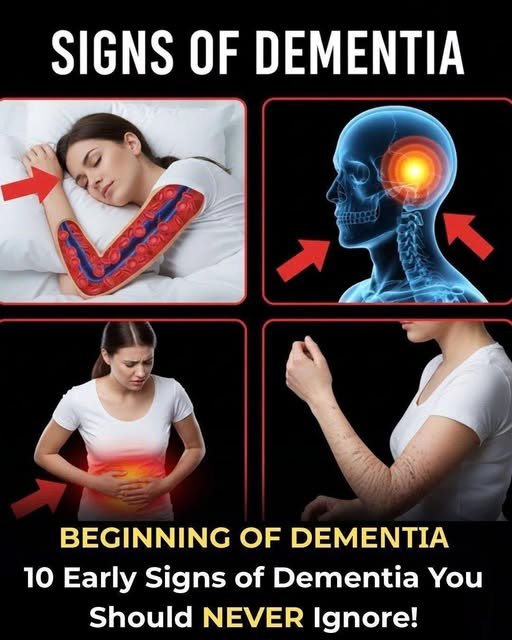
🚩 10 Possible Early Warning Signs
1. Repeating the same questions
A person may repeatedly ask about the same event or conversation because they don’t remember that it already happened. Alzheimer’s Association
2. Increasing difficulty with familiar tasks
Problems with activities that were once routine—such as following a familiar recipe, managing bills, using appliances, or navigating a familiar route—can be significant. National Institute on Aging
3. Getting lost in familiar places
Occasionally taking a wrong turn is different from repeatedly becoming confused about where you are or how to get home.
4. Trouble finding words or following conversations
Early cognitive changes can affect language. Someone may increasingly struggle to find ordinary words or have difficulty following or participating in a conversation. National Institute on Aging
5. Problems with judgment or decision-making
Repeatedly making unusually poor decisions or having difficulty handling situations that previously posed no problem can be a warning sign. National Institute on Aging
6. Difficulty managing money
Missing bills, making unusual financial mistakes, or having increasing difficulty managing familiar financial responsibilities can occur with cognitive decline. National Institute on Aging
7. Frequently misplacing things and being unable to retrace your steps
Everyone loses their keys occasionally. A more concerning pattern is frequently putting objects in unusual places and being unable to work backward to find them. National Institute on Aging
8. Losing track of dates, time, or familiar information
Occasionally forgetting the day and then remembering it is usually normal. Persistently becoming confused about dates, seasons, locations, or familiar people is more concerning. National Institute on Aging
9. Changes in personality, mood, or behavior
Some forms of dementia can involve changes in personality, behavior, judgment, or emotional responses. The specific pattern varies depending on the type of dementia. National Institute on Aging
10. Difficulty taking care of everyday needs
Changes such as neglecting hygiene, eating poorly, behaving unsafely, or becoming unable to manage ordinary daily activities deserve medical attention. National Institute on Aging
⚠️ The Important Part: These Signs Don’t Prove Dementia
This is one of the most important points missing from many viral posts.
Memory and thinking problems can have many causes besides dementia, including medication side effects, sleep problems, depression or anxiety, thyroid problems, vitamin B12 deficiency, infections, alcohol misuse, head injuries, and other medical conditions. Some of these causes can be treated. National Institute on Aging
That’s why seeing one or two symptoms on a social-media checklist doesn’t mean someone has Alzheimer’s disease.
🩺 When Should You See a Doctor?
If you or someone close to you has noticeable or progressively worsening changes in memory or thinking, arrange a medical evaluation.
A doctor may review medications and medical history and perform cognitive and physical assessments. Depending on the situation, additional testing may be needed to determine what is causing the symptoms. National Institute on Aging
Early evaluation can also identify potentially treatable causes and, when dementia is diagnosed, give the person and family more time to discuss treatment, safety, support and future planning. National Institute on Aging
🚨 Sudden Confusion Is Different
A sudden change in mental status should not automatically be assumed to be dementia. Sudden confusion can occur with conditions such as infections, medication effects, metabolic problems or delirium and may require prompt medical assessment. National Institute on Aging
❤️ Bottom Line
The message isn’t “forgetting things means you have dementia.”
It’s this:
Persistent changes that interfere with everyday life deserve attention.
Memory loss is only one possible symptom. Changes in language, judgment, problem-solving, behavior, orientation and the ability to perform familiar tasks can also be important. National Institute on Aging
And importantly, dementia is not a normal part of aging. If something has noticeably changed, getting checked is much more useful than trying to diagnose yourself from a Facebook post.
Have you noticed any of these changes in yourself or someone you love? 🧠❤️
This information is for general education and is not a diagnosis or a substitute for professional medical care.