A Month Before a Heart Attack, Your Feet Warn You of These 6 Signs — What’s Actually True?
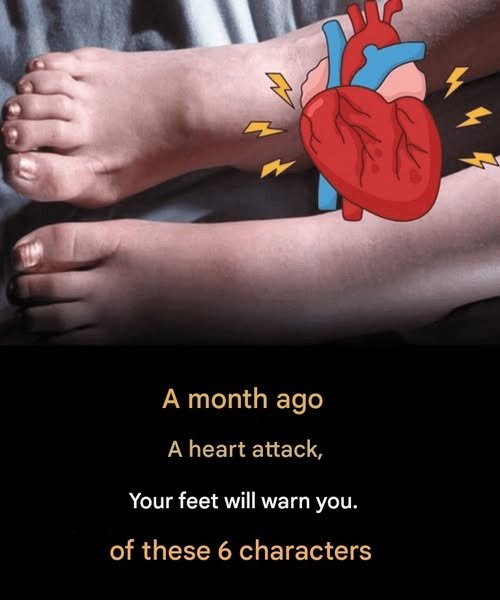
A viral post claims that your feet can warn you one month before a heart attack and suggests looking for six specific changes.
There is an important correction to make: there is no reliable medical rule that your feet will show six warning signs exactly one month before a heart attack. A heart attack can occur suddenly, and its recognized warning symptoms are usually related to the chest, breathing, and upper body—not a specific appearance of the feet. www.heart.org
However, changes in the feet and ankles can sometimes be important signs of cardiovascular problems, particularly fluid retention associated with heart failure.
1. Swollen Feet or Ankles
Swelling in the feet, ankles or lower legs is called edema.
The American Heart Association lists swelling in the feet, ankles and legs among the common symptoms of heart failure. Fluid can accumulate in tissues when the heart isn’t pumping effectively. www.heart.org
But swollen feet have many other possible causes, including prolonged standing, certain medications, venous problems, kidney disease and other conditions.
Swollen feet alone do not mean a heart attack is coming.
2. Rapidly Increasing Leg or Foot Swelling
A sudden increase in swelling deserves attention, particularly when it occurs together with other symptoms.
For people with heart failure, the American Heart Association recommends watching for increased swelling of the legs or ankles and sudden weight gain caused by fluid retention. www.heart.org
3. Sudden Weight Gain Along With Swelling
If your feet and ankles are becoming swollen and your weight rises quickly over a short period, this can sometimes indicate fluid retention.
The AHA notes that gaining more than about 2–3 pounds (0.9–1.4 kg) in a day or 5 pounds (2.3 kg) in a week can be a warning sign in people with heart failure, although the appropriate threshold should be discussed with their healthcare professional. www.heart.org
4. Shortness of Breath Along With Leg Swelling
This combination deserves medical attention.
Heart failure can cause fluid buildup in the body and lungs, resulting in swollen legs or feet and shortness of breath. Some people also have difficulty breathing when lying flat or wake during the night feeling breathless. www.heart.org
It is important not to assume that this is simply a problem with your feet.
5. Unusual Fatigue or Weakness
Persistent fatigue can occur with heart failure because the heart may not be able to supply enough blood to meet the body’s demands. www.heart.org
But fatigue is extremely common and has many possible causes, so it isn’t a specific predictor of a heart attack.
6. Changes in Skin Color or Temperature
Cold, pale or bluish feet can sometimes indicate circulation problems and should not simply be dismissed, particularly when accompanied by pain, numbness or other changes.
However, these findings do not specifically predict a heart attack. They may have several possible causes and require appropriate evaluation.
What Are the Real Warning Signs of a Heart Attack?
This is the most important part of the article.
According to the American Heart Association, common heart-attack warning signs include:
Pressure, squeezing or pain in the chest
Pain or discomfort in one or both arms
Pain or discomfort in the back, neck, jaw or stomach
Shortness of breath
Cold sweating
Nausea
Lightheadedness
Unusual fatigue or weakness in some people www.heart.org
Symptoms can begin gradually or suddenly, and not everyone experiences the same combination of symptoms.
🚨 Don’t Wait for Your Feet
If someone develops chest pressure or pain, severe shortness of breath, pain spreading to the arm, back, neck or jaw, fainting, or other possible heart-attack symptoms, emergency medical care should be sought immediately.www.heart.org
Waiting to see whether the feet develop a particular sign could delay treatment.
The Bottom Line
Your feet can sometimes provide clues about fluid retention or circulation problems, but the claim that they reliably warn you of a heart attack one month in advance is not supported by medical evidence.
Pay attention to new or worsening swelling—especially when accompanied by shortness of breath, rapid weight gain, fatigue or other symptoms—and discuss it with a healthcare professional.
And if symptoms of a heart attack appear, don’t wait for a foot warning. Seek emergency medical care immediately.www.heart.org
This article is for educational purposes and does not diagnose heart disease or predict heart attacks.