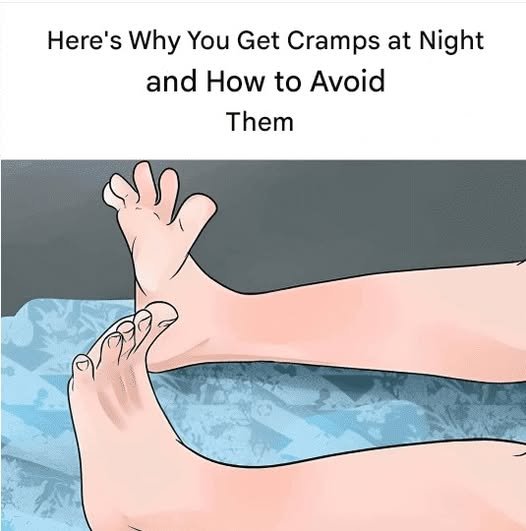
This Is Why We Get Cramps at Night — and How to Help Prevent Them
Few things are more unpleasant than suddenly waking up in the middle of the night with a calf or foot muscle that has tightened into a painful knot.
These episodes are called nocturnal leg cramps. They are common, usually harmless, and often last from a few seconds to several minutes. The calf is the most frequently affected area, although the feet and thighs can also cramp. (Mayo Clinic)
Why Do Leg Cramps Happen at Night?
In many cases, there is no single identifiable cause. Researchers believe tired muscles and changes in nerve activity may play a role. The likelihood of nighttime cramps also increases with age. (Mayo Clinic)
Several factors can contribute, including:
Dehydration
Muscle fatigue or overuse
Long periods of sitting or inactivity
Pregnancy
Certain medications
Some nerve problems
Diabetes
Kidney disease
Circulation problems
Certain thyroid or metabolic conditions (Mayo Clinic)
Electrolyte deficiencies can sometimes contribute to muscle cramps, but it is not correct to assume that every nighttime cramp means you are deficient in magnesium, potassium, or calcium. (Mayo Clinic)
What Should You Do When a Cramp Starts?
The goal is to gently lengthen the contracted muscle.
If your calf suddenly cramps:
Straighten the affected leg.
Pull your toes and foot upward toward your face.
Gently massage the cramped muscle.
If you can stand safely, put weight on the affected leg and walk slowly.
A warm shower or bath may help relax the muscle. (Mayo Clinic)
Don’t force a painful stretch aggressively. Move gradually until the muscle begins to release.
How Can You Reduce Nighttime Cramps?
A few simple habits may help:
Stretch Before Bed
Gentle calf stretching before going to sleep can reduce the frequency of nighttime cramps for some people. Regular calf stretches are also recommended by the NHS. (nhs.uk)
Stay Hydrated
Drink enough fluids throughout the day, particularly if you’ve been exercising or sweating heavily. Limiting excessive alcohol and caffeine may also be helpful. (Mayo Clinic)
Keep Your Legs Moving
If you spend much of the day sitting, regular movement and gentle activity may help. Mayo Clinic also suggests a few minutes of light stationary cycling before bed for some people. (Mayo Clinic)
Check Your Sleeping Position
Some people find that loosening tightly tucked sheets and blankets around the feet reduces nighttime cramping. (Mayo Clinic)
What About Magnesium?
Magnesium is often promoted online as the answer to nighttime leg cramps. However, supplements are not a guaranteed solution for everyone.
The cause of recurrent cramps may be unrelated to magnesium, and taking unnecessary supplements can have side effects or interact with medications. If cramps are frequent, it is better to discuss possible causes with a healthcare professional rather than automatically taking a supplement.
When Should You Talk to a Doctor?
Occasional nighttime cramps are usually nothing to worry about. However, seek medical advice if cramps:
Sudden leg pain accompanied by significant swelling, redness, warmth, or other concerning symptoms also deserves prompt medical evaluation because not every painful leg symptom is a simple muscle cramp. (Mayo Clinic)
The Bottom Line
Nighttime leg cramps are common, particularly as we get older, and there isn’t one universal cause or one magic remedy.
Staying hydrated, gently stretching the calves before bed, maintaining regular movement, and knowing how to stretch the muscle when a cramp begins can all help. If the cramps become frequent, severe, or occur alongside weakness, swelling, or numbness, it’s worth having the underlying cause checked. (Mayo Clinic)